Congo Basin Launches Direct Payments to Farmers for Forest Protection
What if protecting the planet’s second-largest rainforest could also lift farmers out of poverty? That’s exactly what’s happening in the Congo Basin, where a groundbreaking program just launched that pays farmers directly for preserving forests.
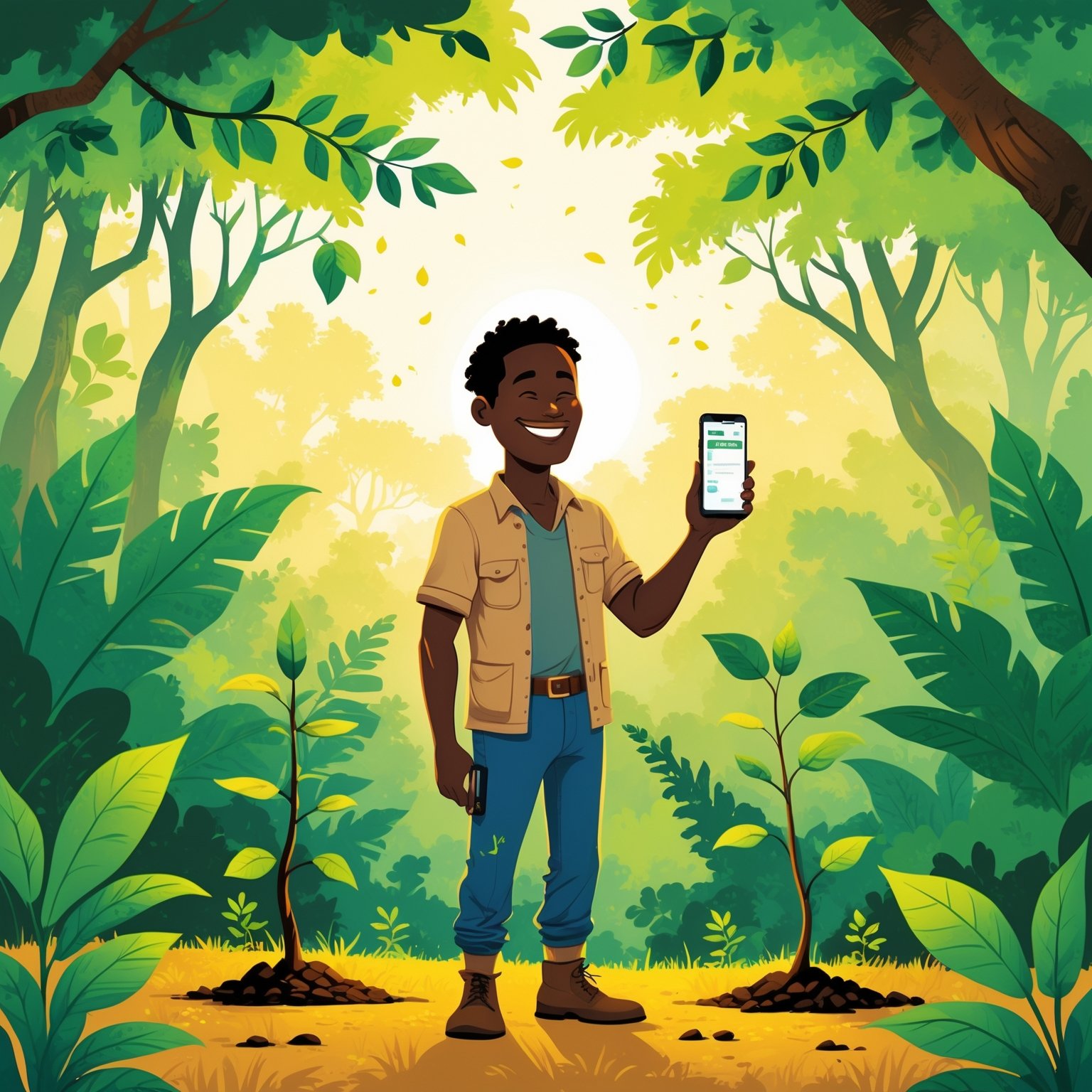
Announced November 18th at the COP30 climate summit in Brazil, this payments-for-environmental-services initiative represents a new chapter in conservation—one where protecting nature and supporting livelihoods go hand in hand. Supported by the Central African Forest Initiative, the program transfers money straight to communities and individual farmers via a simple mobile app, cutting through bureaucracy to reward those doing the actual work of conservation.
Here’s how it works: farmers receive payments for completing six specific activities—agroforestry, reforestation, deforestation-free agriculture, forest regeneration, sustainable forest management, and conservation. Each action is verified before payment, ensuring accountability while keeping the process straightforward.
“Hundreds of farmers are already under contract and the first direct mobile payments based on performance were successfully made this month, confirming the efficiency and fairness of the system,” announced Kirsten Schuijt, director-general of WWF International, which is helping implement the program.
This isn’t just theory—it’s already working. Real money is reaching real people who are making real differences for the forests that help regulate our planet’s climate. The Congo Basin forests are critical carbon sinks, absorbing billions of tons of CO2 annually. They’re also home to incredible biodiversity and millions of people whose livelihoods depend on them.
For too long, conservation efforts have asked communities to sacrifice economic opportunity for environmental protection. This program flips that equation: protecting forests becomes the economic opportunity. It builds on a decade of pilot projects in the region, refined and ready to scale.
As the world grapples with climate change, solutions like this remind us that we don’t have to choose between people and planet. Sometimes, taking care of one means taking care of both.
Source: news.mongabay.com
Share this content: