
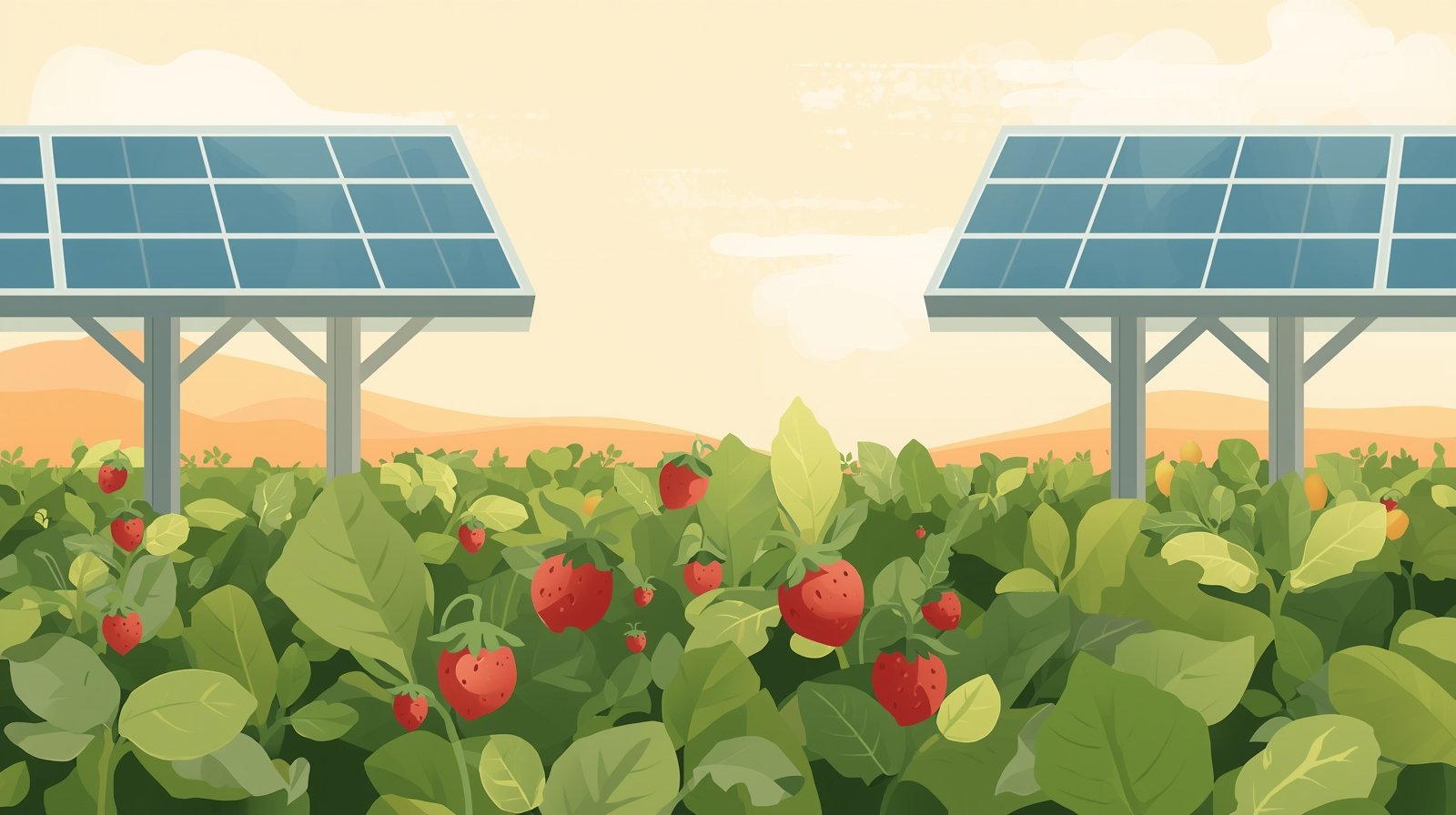
Agrivoltaics: A Solution for Farming and Energy
Dual harvest: Clean energy and better crops from same land
Something unexpected is happening under solar panels on Canadian farms. The crops are growing better, not worse.
Researchers at Western University discovered that strawberries grown beneath solar panels produced 18% higher yields than those in open fields. The finding applies to dozens of other crops, including corn, lettuce, potatoes, tomatoes, and wheat.
The secret lies in the microclimate created underneath the panels. Temperatures stay cooler and more stable. The shade protects plants from excess sun, wind, and hail while conserving precious water. For many crops, it turns out full sun is actually too much.
This practice, called agrivoltaics, produces both renewable electricity and increased food per acre. A recent study found these dual-use farms emit 69% less greenhouse gases compared to separate food and solar operations.
The benefits persist even when the panels aren’t generating electricity. The physical structure alone maintains the favorable growing conditions that help crops thrive. For farmers facing climate uncertainty, agrivoltaics offers a buffer against extreme weather while providing steady income from energy production alongside traditional harvests.
The Heart of It:
Nature often flourishes not in extremes but in balance. What looks like competition for space can become cooperation, what seems like sacrifice can become abundance. The panels that gather light also create shelter, proving that different needs don’t always conflict. Sometimes the answer isn’t choosing between two goods, but finding the configuration where both can thrive.
Source: The gift that keeps on giving: How solar panels on farms can help increase crop yields – TechXplore/The Conversation, November 24, 2025
Share this content: