Graphene Supercapacitor Charges in Seconds and Could Replace Traditional Batteries
GOOD NEWS IN ONE SENTENCE Monash University engineers developed a revolutionary graphene-based supercapacitor that stores as much energy as lead-acid batteries while delivering power far faster than conventional batteries, with commercial production already underway.
WHY THIS MATTERS The renewable energy revolution hits a wall when we can’t store power efficiently or release it quickly enough. Batteries store lots of energy but charge slowly and wear out. Supercapacitors charge instantly but store too little. This breakthrough combines the best of both worlds using abundant Australian graphite, potentially transforming everything from electric vehicles to grid stabilization while making the technology scalable and affordable.
THE STORY
The Surface Area Problem
Supercapacitors have tantalized engineers for years with their promise of instant charging and virtually unlimited charge cycles. They store energy electrostatically rather than through chemical reactions, which means they can charge and discharge almost instantaneously. The catch? Only a tiny fraction of their carbon material’s surface area was actually usable for storing energy.
Professor Mainak Majumder and his team at Monash University’s Department of Mechanical and Aerospace Engineering saw the untapped potential. They just needed to figure out how to unlock it.
Heat Treatment Changes Everything
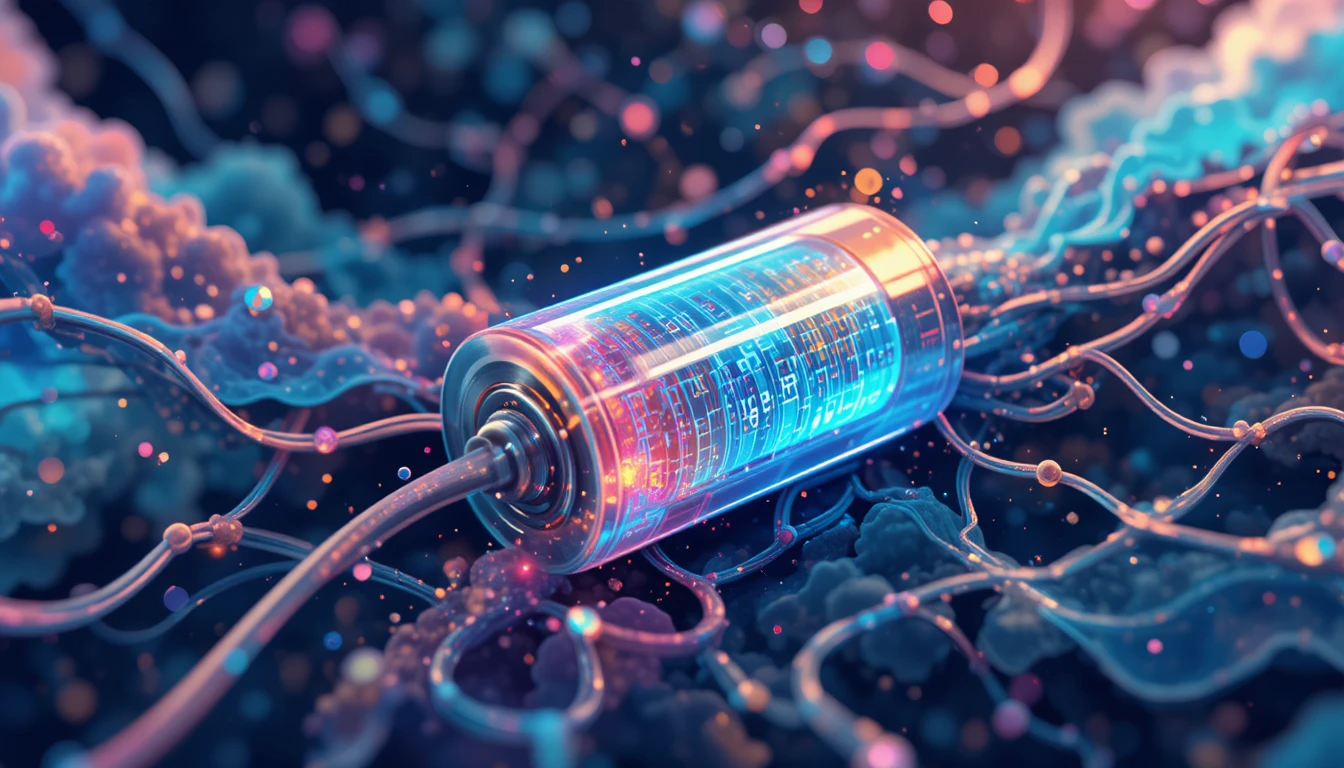
The answer came through rethinking how graphite oxide is processed. Using a rapid thermal annealing technique, the researchers created multiscale reduced graphene oxide, a material with highly curved graphene structures that provide precise pathways for ions to travel with exceptional speed and efficiency.
The transformation is dramatic. Instead of ions getting stuck between rigid graphene sheets, they now flow through carefully engineered highways and reservoirs. The curved nanocrystals and disordered graphene sheets work together, dramatically increasing storage capacity while maintaining lightning-fast charging.
Dr. Petar Jovanović, research fellow at the ARC AM2D Hub, ran the numbers. When assembled into pouch cell devices, the supercapacitors achieved volumetric energy densities up to 99.5 watt-hours per liter with power densities as high as 69.2 kilowatts per liter. They maintained excellent cycle stability and charged in almost no time.
Already Heading to Market
These aren’t just laboratory curiosities. Monash spinout company Ionic Industries is already manufacturing the graphene material in commercial quantities. The company is working with energy storage partners to bring applications to market where both high energy storage and rapid power delivery matter most.
The implications ripple across industries. Electric vehicles could charge in minutes instead of hours. Power grids could stabilize renewable energy fluctuations more effectively. Consumer electronics could run longer and charge faster. Drones could stay airborne with quick power bursts.
BY THE NUMBERS
- 99.5 Wh/L volumetric energy density achieved
- 69.2 kW/L power density recorded
- Lead-acid battery energy matched
- Seconds to charge vs. hours for batteries
- Made from abundant Australian graphite
- Commercial production already underway
- Applications: EVs, grids, electronics, drones
WHAT’S NEXT
The research team continues refining the technology while Ionic Industries scales up production. Early partnerships with energy storage companies will determine which applications reach market first. The technology’s compatibility with existing manufacturing processes and abundant raw materials positions it well for rapid adoption across multiple sectors.
THE HEART OF IT: Energy storage has been the bottleneck holding back the clean energy future. We’ve had batteries that store well but charge slowly, wearing out after a few years of use. We’ve had supercapacitors that charge instantly but hold too little energy to be practical. Combining both capabilities in a single device built from abundant natural materials changes the equation entirely. This isn’t just about faster charging or longer storage. It’s about removing one of the fundamental barriers to electrifying transportation and stabilizing renewable power grids. When Australian graphite can be transformed into energy storage that works the way the future needs it to, that’s not incremental progress. That’s infrastructure revolution.
SOURCE https://www.sciencedaily.com/releases/2025/11/251130205509.htm
OPTIMISM RATING ⭐⭐⭐⭐⭐ (5/5)
Share this content: