How CRISPR is Transforming Wheat Fertilization
UC Davis Breakthrough Could Save Farmers Billions
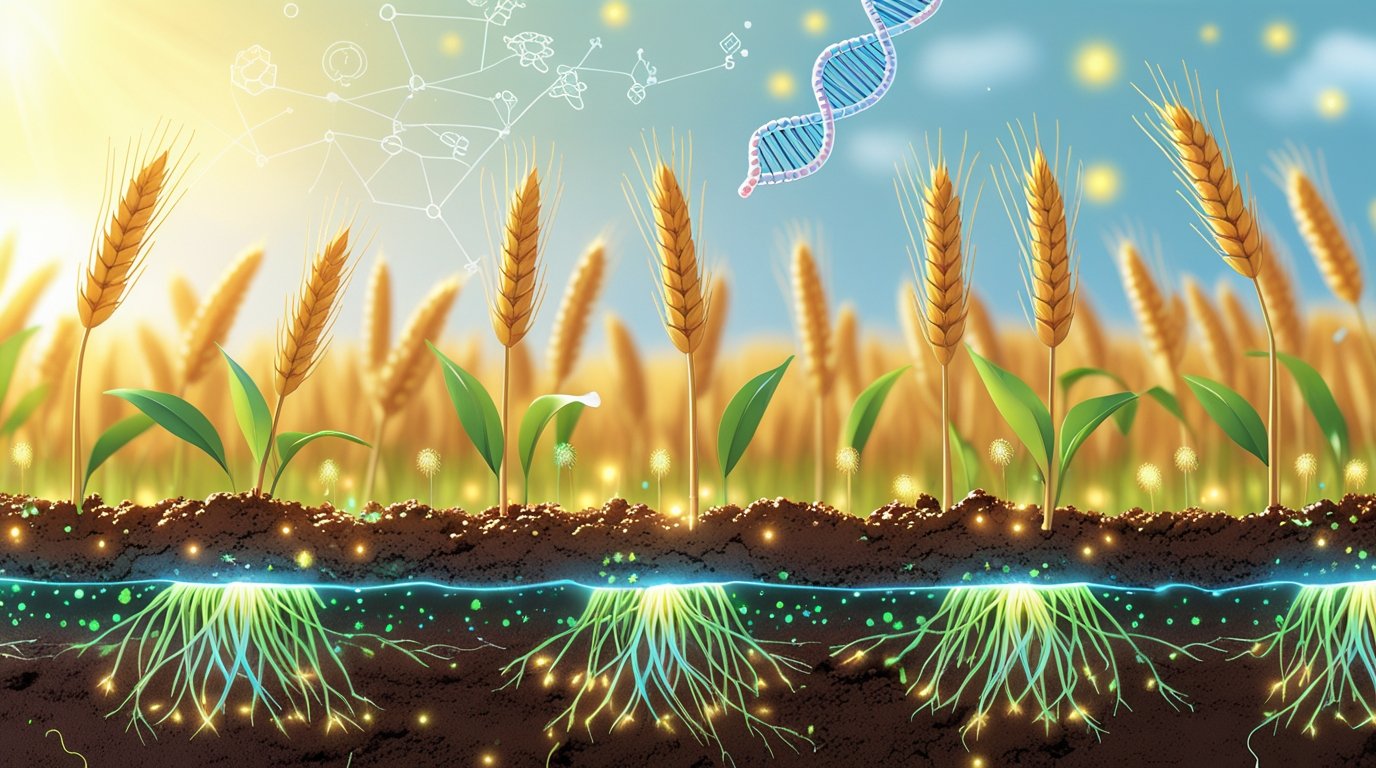
Scientists at the University of California, Davis, have developed self-fertilizing wheat plants that can stimulate the production of their own fertilizer. This agricultural breakthrough could lead to reduced pollution and significantly lower fertilizer costs for farmers worldwide.
The sustainable farming technology was pioneered by a team led by Eduardo Blumwald, a distinguished professor in the Department of Plant Sciences. The researchers used the gene-editing tool CRISPR to boost wheat’s production of apigenin, a chemical the plant naturally produces. When wheat releases excess apigenin through its roots into the soil, it triggers certain bacteria to convert nitrogen from the air into a form the plants can absorb and use for growth. This process is called nitrogen fixation.
The CRISPR agriculture approach differs from decades of previous attempts to develop cereal crops with active root nodules or to colonize cereals with nitrogen-fixing bacteria. Instead, the team focused on helping the existing soil bacteria do their work more effectively, regardless of their location, as long as the fixed nitrogen could reach the plant.
The financial implications for sustainable farming are substantial. US farmers spent nearly $36 billion on fertilizers in 2023. Blumwald estimates that even a 10% reduction in fertilizer costs could save more than a billion dollars annually. The nitrogen-fixing wheat breakthrough could be especially transformative for farmers in developing countries who cannot afford fertilizers at all.
🦉 The Heart of It: For decades, scientists tried to force wheat to behave like legumes. It didn’t work until someone asked a different question: What if we don’t change what wheat is, but help it communicate better with what’s already around it? The wisest solutions often come not from forcing nature to bend, but from helping it speak its own language more clearly.
Source: ScienceDaily
Share this content: